

The situation across the Persian Gulf and the wider Middle East remains chaotic, a reality reflected in global oil prices trading above 105 dollars per barrel.
Uncertainty surrounding the Strait of Hormuz, where recent reports regarding an opening for a deal between the US and Iran fail to convince analysts, coupled with recent military escalations in Yemen by the Houthis, who maintain complete control over the other vital passage of Bab al-Mandab in the Red Sea, have triggered global alarm.
Indicatively, military officials from Turkey and Pakistan are convening urgently in Saudi Arabia under their mutual defense pact to assess potential responses to Houthi attacks against Saudi energy infrastructure and facilities.
The Middle East stands on the brink of a new, generalized crisis, as the Strait of Hormuz and Bab al-Mandab have turned into two highly dangerous geopolitical choke points threatening to drag energy, shipping, trade, and the global economy into the abyss.
We want an agreement
Iranian President Masoud Pezeshkian stated on Thursday that his government is willing to finalize a deal with the US to end the war before Americans head to the polls in November.
«We do not want to reach the midterms», Masoud Pezeshkian stated in a brief meeting with NBC News and other media outlets on the sidelines of the UN General Assembly.
«We would like the Americans to return to the memorandum of understanding before the midterm elections», Masoud Pezeshkian added, referring to the MOU between the US and Iran that outlined a temporary ceasefire.
The agreement, signed in June, ultimately collapsed.

Trump: They are waiting for the elections, we will have a deal
The remarks by Masoud Pezeshkian came two days after President Donald Trump, addressing world leaders at the UN, expressed his belief that the Iranian regime will not agree to settle the conflict until after the autumn elections.
«I believe we will reach an agreement immediately after the elections, because it makes no sense for them not to do so», Donald Trump stated.
«They are waiting to see how I perform in the midterm elections».
Polls indicate that the Democrats hold an advantage ahead of the November electoral contests.
The latest survey from the NBC News Decision Desk showed that 31% of respondents approve of the way Donald Trump is handling the war with Iran, while 69% disapprove.
The plan to open Hormuz
Iranian Foreign Minister Abbas Araghchi told a gathering of journalists during a separate briefing in New York on Thursday that during this week’s discussions, a plan was presented to American officials via mediators that could lead to the reopening of the Strait of Hormuz and the resumption of talks after seven days.
Abbas Araghchi stated that the plan can take effect as soon as the US agrees, asserting that it does not exceed the provisions signed by Donald Trump in June, commonly cited as the memorandum of understanding.
«We have presented to the United States, through mediators, a plan under which, provided certain conditions are met, the Strait of Hormuz will open at the end of seven days and talks will resume», Abbas Araghchi said.

The conditions
«The terms we requested the US to fulfill are neither new nor do they exceed what was already included in the Islamabad agreement, signed by the US President».
Abbas Araghchi pointed out that one of the plan’s conditions requires the US to accept a maritime transit route through the Strait of Hormuz agreed upon by Iran and Oman.
The White House did not immediately respond to a request for comment.
Cyrus Schayegh (analyst): Nothing has truly changed
The new Iranian proposal for the Strait of Hormuz suggests that diplomatic efforts between the US and Iran are making no meaningful headway, argues Cyrus Schayegh, professor of international history and politics at the Geneva Graduate Institute.
«I think it is only a very minor signal, because fundamentally nothing has truly changed», Cyrus Schayegh told Al Jazeera.
As he explains, Iran, for its part, «continues to insist that it wants to maintain the additional leverage it acquired during the war, and that the June memorandum remains an essential component of the roadmap forward».
As for the US, it «continues fundamentally to refuse accepting this roadmap discussion».
This proposal, under which the Strait of Hormuz would reopen in seven days, in all likelihood before Iranian assets are unfrozen or sanctions lifted, shows that the Iranians were willing to make a minor concession.
However, it remains uncertain whether this will suffice for the Americans.
Gulf states play a vital role in bringing both parties together, Cyrus Schayegh noted, though they will need to «consolidate their standing» with both nations.
Nonetheless, «beyond that, I do not believe we will see any breakthrough soon, and certainly not before the midterm elections in the United States», Cyrus Schayegh concluded.

Alarm in Saudi Arabia: Emergency meeting with Turkey and Pakistan
Saudi Arabia, Turkey, and Pakistan announced plans for an urgent meeting of their military chiefs of staff to explore ways to support the Kingdom under the Mecca Joint Defense Agreement.
The announcement followed a meeting held Thursday in New York between Saudi Foreign Minister Prince Faisal bin Farhan Al Saud, Pakistani Deputy Prime Minister and Foreign Minister Ishaq Dar, and Turkish Foreign Minister Hakan Fidan, according to the Saudi Press Agency.
The release did not specify the exact timing of the military chiefs’ gathering nor the type of support under consideration.
However, the meeting is scheduled for today, Friday, September 25.
Provisions of the joint defense pact
Saudi Arabia, Turkey, and Pakistan signed the Mecca Joint Defense Agreement on August 7, aiming to reinforce collective deterrence and broaden defense cooperation.
The pact establishes that an attack against one of the three nations is considered an attack against all.
Since then, the three countries have initiated mechanisms within the framework of the accord.
Their foreign and defense ministers, alongside military chiefs, met in Istanbul on August 31 for the inaugural session of the Strategic Political and Defense Committee, agreeing to establish a permanent secretariat in Saudi Arabia and deepen military coordination.
Thursday’s foreign ministers’ meeting also condemned attacks targeting Mecca as well as civilian and economic installations in Saudi Arabia, reaffirming the Kingdom’s right to self-defense under Article 51 of the UN Charter.

Fresh wave of strikes
These diplomatic maneuvers unfolded as Saudi Arabia reported a fresh wave of attacks originating from Yemen.
Saudi Arabia announced that its air defenses intercepted six ballistic missiles fired toward Taif and Yanbu on Thursday.
General Turki al-Malki, spokesperson for the coalition, stated that any further escalation by the Houthis will be «met with decisiveness».
Saudi Civil Defense authorities issued warnings across several regions before announcing later that the threat had passed.
Sensitive target
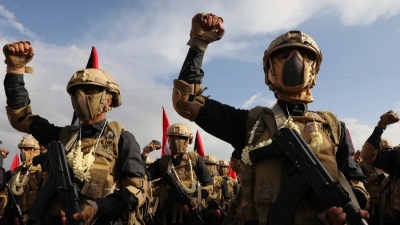
The Houthis, on their part, claimed to have launched missile and drone strikes against a «sensitive target» in Riyadh and Saudi Aramco facilities in Yanbu.
France also offered defensive backing to Saudi Arabia.
President Emmanuel Macron stated that Paris will deploy military assets to help safeguard Yanbu.
«We will send military resources, specifically soldiers, radar systems, and defense batteries, to protect this facility», Emmanuel Macron said in an interview with TF1 on Thursday.
Casualties mount
The cross-border strikes coincided with some of the fiercest combat recorded inside Yemen since hostilities escalated anew.
Clashes across multiple fronts in Yemen claimed the lives of at least 150 Houthi fighters and pro-government troops during the 24 hours leading into Friday, according to an assessment by AFP.
The AFP toll included 98 pro-government fighters and 52 Houthis, with skirmishes concentrated around the Kahboub mountain range and areas between Lahj and Taiz overlooking the Bab al-Mandab strait.

Immense economic hazard
The Houthis have also widened their presence along Yemen’s Red Sea coastline, capturing among other sites the port of Mocha and strategic islands.
These territorial gains have bolstered the group’s grip around Bab al-Mandab, one of the world’s busiest maritime corridors.
According to the AP, roughly 12% of global trade typically traverses this passage.
The internationally recognized government of Yemen has called for deeper international intervention, warning at the UN General Assembly that Houthi control over the strait presents an extensive global economic threat.
Vice President Abdullah Abdulkader Al Alimi-Bawzer accused the Houthis of utilizing freedom of navigation as leverage, stating that their actions are «holding the entire global economy hostage».
Population displacement
The conflict has forced more than 230,000 individuals to flee their homes since early September, according to the UNHCR, as fighting spreads across multiple sectors.
The agency noted that this recent displacement adds to the approximately 5.2 million individuals already internally displaced within Yemen.
The UNHCR reported that families have been displaced across multiple governorates, including Hodeidah, Taiz, Lahj, Aden, Abyan, Marib, al-Dhalea, and Shabwah, with many fleeing hastily carrying minimal belongings.
Shelter, food, potable water, medical care, and protection services rank among the most urgent requirements, with host communities and displacement sites enduring mounting strain.

Controlling 5,400 square kilometers
Field developments over recent weeks along Yemen’s western coast and the consolidation of Houthi military control across an area exceeding 5,400 square kilometers in the Taiz and Hodeidah governorates signal a qualitative shift in the conflict’s nature, transitioning from an asymmetric local fight into a determinant of the regional power balance.
The sequential capture of key strategic assets, such as the port and airport of Mocha, the coastal district of Dhubab, the strategic islands of Mayyun (Perim) and Hanish, and crucially the dominant heights of Kahbub, has established a new defensive perimeter at the southern entrance of the Red Sea.
This topographical advantage, particularly control over the Kahbub heights enabling direct observation and fire coordination over land supply routes and the maritime corridors of Bab al-Mandab, coupled with rapid fortifications and layered defense lines north of al-Aradi, has stripped the Yemeni government coalition of any realistic ground recapture capability.
Having brought under their command coastal infrastructure valued in the hundreds of millions of dollars and established physical control over the strait’s entrance, the Houthis have shifted the domestic balance while anchoring their surveillance and anti-access capabilities across one of the globe’s most critical maritime passages.
Global economic shock
From an energy geoeconomics standpoint, this shift has reshaped the vulnerability profile of global hydrocarbon distribution, challenging traditional assumptions regarding maritime route security.
The surge of Brent crude toward 110 dollars per barrel demonstrates the activation of «geographical risk compression» across Middle East energy transit infrastructure.
This indicates that the Bab al-Mandab strait no longer operates as an isolated transit point, but in systemic link with the Strait of Hormuz and overland pipelines.
The vulnerability of bypass alternatives, such as Saudi Arabia’s East-West Crude Oil Pipeline with an operational capacity of 4 million barrels daily terminating at Red Sea ports to avoid Persian Gulf choke points, proved that circumventing one maritime corridor without securing the terminal route is an illusion.
The concurrent exposure of three core transit points, the Strait of Hormuz, trans-Arabian pipelines, and the Bab al-Mandab strait, to Houthi strike ranges has saddled energy markets with an inflexible «geopolitical risk premium», delivering inflationary pressures directly to industrial hubs across Asia and Europe.

Immense operational costs
Alongside oil market turbulence, global shipping networks and supply chains have sustained an unprecedented structural shock exceeding tactical military parameters.
A 50% plunge in daily vessel transits through Bab al-Mandab, dropping from 30 to 15 ships, alongside exponential rises in war risk insurance premiums from maritime underwriters, has forced logistics giants to weigh lethal hazards against costly detours around the Cape of Good Hope.
Adding 10 to 14 sailing days and thousands of nautical miles to container shipments has upended just-in-time supply chain operations connecting East Asia and Western Europe, triggering cargo clearance backlogs, fuel cost accumulation, and reductions in active commercial shipping capacity worldwide.
Conversely, recapturing major installations in Mocha, including harbor facilities, a 60-megawatt power plant, and airfield runways, has reinforced the Houthi financial base while severing adversary supply lines along the southern and western seaboard.
UN Security Council division
On the diplomatic front, emergency sessions of the UN Security Council have exposed a structural fissure among major powers regarding crisis response, revealing the erosion of Western deterrence.
While the United States, Great Britain, and European allies, invoking resolutions such as 2216 and 2722 and relying on missions like Operation Aspides, push to suppress maritime threats and check Iran’s regional influence, the cautious stance of eastern powers such as China and Russia, emphasizing root causes, Yemen’s territorial integrity, and restraint against hasty military actions, has stalled international consensus.
Concurrently, the regional coalition’s inability to secure military involvement from nations like Egypt, which avoids entanglement along the western coast due to historical precedent and strategic priorities, along with reluctance from Pakistan and Turkey for direct combat engagement, underscores the severe deadlock surrounding military options against the Houthis.

Turning point
Developments this month represent a watershed moment in the geopolitics of Southwestern Asia, as the Houthis have upgraded their geostrategic standing from an asymmetric proxy into an unavoidable balancing factor in international security architecture.
Unified control over the Bab al-Mandab strait, Mayyun Island, and the commanding Kahbub heights forces Western and regional capitals to confront the reality that maritime security in the Red Sea can no longer be decoupled from Yemen’s domestic political settlement.
Geography has once again demonstrated its advantage over external control mechanisms, ensuring that future security architectures, economic arrangements, or stability frameworks across this vital artery cannot bypass the strategic weight of the Houthis.
www.bankingnews.gr








Σχόλια αναγνωστών