

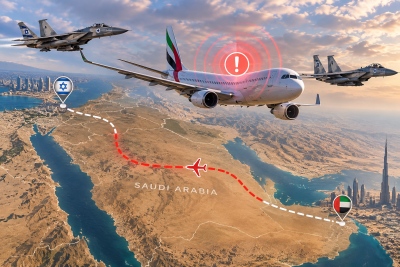
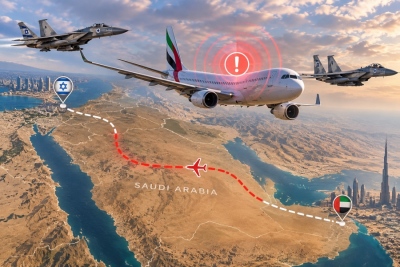
Hours of anxiety and intense mobilization were caused by a flydubai flight from Dubai to Tel Aviv, as the aircraft briefly transmitted a distress signal indicating a possible hijacking. A total of 174 passengers were on board, including 27 children, while at the time the distress signal was activated, the plane was in manual descent and executing a course reversal. The development triggered an immediate response from Israeli authorities, with Israeli fighters taking off to address the incident.
Diversion toward Saudi Arabia
The aircraft changed course and headed toward Saudi Arabia, while simultaneously beginning to reduce its flight altitude. Tension prevailed for several minutes as authorities scrambled to determine what exactly had transpired inside the aircraft and whether a real threat existed for the passengers. Israeli authorities were placed on high alert, and the incident was initially treated as a severe security threat.
Emergency consultation between Netanyahu and Katz
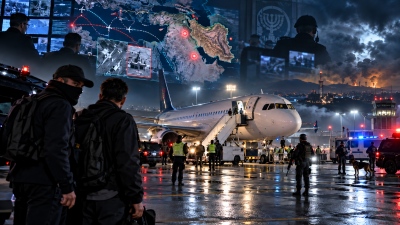
The gravity of the situation led Benjamin Netanyahu and Minister of Defense Israel Katz into emergency consultations. Israeli authorities closely monitored the aircraft's path, as it remained unclear whether it was a hijacking attempt or another incident that triggered the distress signal. After several tense minutes, however, security sources began transmitting reassuring updates as the plane continued its course toward Saudi Arabia.
Safe landing in Tabuk
The aircraft ultimately headed toward Tabuk airport in Saudi Arabia, where it landed safely. The landing brought an end to the drama that started with the sudden activation of the distress signal and the course change. Competent authorities could now examine on site what had caused the emergency alert.
Brawl between the pilots
Subsequently, emerging details completely overturned the initial scenario. As it turned out, the distress signal was activated due to an act of cockpit violence. Specifically, according to information from Israeli media, the flight's two pilots came to blows, leading to the incident that triggered the emergency signal. Thus, the alarm over a potential hijacking ultimately evolved into an exceptionally unusual cockpit brawl. The aircraft, along with its 174 passengers and crew, landed safely in Saudi Arabia, while authorities are now tasked with fully investigating the circumstances surrounding the episode.
From fear of hijacking to security alert
The incident initially sparked grave concern, as the transmission of a squawk code associated with hijacking, combined with a course change and altitude descent, painted a picture of a potential threat. The safe landing in Saudi Arabia and subsequent reports of the pilot fight eliminated the possibility of a hijacking. However, the incident highlighted once again how quickly a cockpit dispute can escalate into an international security alarm, particularly in a region where air traffic remains highly sensitive due to broader geopolitical tensions.
Flight history
According to flight tracking data, the flydubai aircraft initially squawked code 7700, which serves as an international emergency signal. Shortly thereafter, the plane transmitted code 7500, used to indicate a hijacking or unlawful interference. The aircraft was en route from Dubai to Tel Aviv when it began altering its flight path over Saudi Arabia. A short time later, the aircraft disappeared from flight tracking websites.
Israeli fighters scrambled
Fighter aircraft from the Israeli Air Force took off and vectoring toward the airliner. The development caused an immediate alarm within the Israeli government, as squawk 7500 is considered a critical distress signal linked to hijacking threats. Israeli media reported that emergency consultations were conducted at the highest government level.
????? Developing: Security incident aboard Dubai–Tel Aviv flight A flydubai passenger aircraft carrying approximately 100 Israelis has triggered a major security response after transmitting emergency codes while flying from Dubai to Tel Aviv, according to Israeli media. Flight FZ1073 initially transmitted 7700 (general emergency) with reports that it subsequently transmitted 7500, the code for unlawful interference/hijacking. Israeli media report that communications with the aircraft were lost and that Israeli Air Force jets were dispatched to intercept it. The Boeing 737 MAX 8 changed course over Saudi Arabia and has reportedly begun heading toward Israel, although reports say it has not been cleared to land at Ben Gurion Airport. The circumstances onboard remain unclear. Developing.
— DD Geopolitics (@DD_Geopolitics) September 30, 2026
www.bankingnews.gr









Σχόλια αναγνωστών