

AIPAC: End to public endorsements and direct candidate financing in the US — Strategic shift under the weight of anger over Israel
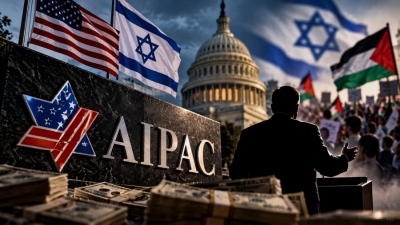
The most powerful pro-Israel lobbying organization in the US, the American Israel Public Affairs Committee (AIPAC), announced that it is halting public endorsements of political candidates and ending direct financial contributions to them, as American voters' discontent toward Israel intensifies. The decision marks a shift in strategy for AIPAC, which seeks to continue supporting Republicans and Democrats who align unreservedly with Israel, while adopting a less exposed political approach. In an email to its supporters on Wednesday, October 21, the organization noted that it is re-evaluating the political environment and adjusting its actions to new conditions. "To win the fight for the future of the country and the US-Israel alliance, we must build a more strategic, effective, and flexible political operation," it characteristically stated.
New strategy centered on private donations
AIPAC announced that it will prioritize expanding direct and bundled financial contributions from individual Americans to candidates, while simultaneously utilizing new political fundraising tools. "Public endorsements of candidates, direct contributions from political action committees (PACs), and dedicated funding commitments for specific candidates will no longer be part of our approach," the organization stated. The goal, according to the group, is to broaden individual donations and utilize new tools that will help its political allies prevail in elections. Political Action Committees (PACs) are organized mechanisms for raising and disbursing funds to support political candidates. AIPAC, as a PAC, is subject to a direct contribution limit of $5,000 per candidate per election cycle. However, a different status applies to so-called Super PACs, which can execute unlimited independent political expenditures without making direct contributions to candidates.
The United Democracy Project and millions of dollars
AIPAC maintains its own Super PAC, named the United Democracy Project (UDP), which ranks among the largest spenders in US electoral politics. This is a mechanism with an exclusive focus on promoting pro-Israel interests. During the 2024 election cycle, the UDP spent more than $60 million attempting to influence electoral contests. This specific activity is expected to continue, as Super PAC expenditures are not considered direct financial contributions to candidates and, consequently, do not fall under the policy shift announced by AIPAC. The organization has also previously utilized so-called "shell PACs" during election periods, which it subsequently dissolves after transferring their funds to the UDP. "We believe this approach allows us to capitalize on new innovations and achieve even greater political impact on policy influence," AIPAC noted. It added that it will focus its time and resources on the most effective method of funding—bundled contributions from individual Americans to candidates—while maintaining the capacity for rapid adaptation in a constantly evolving political environment.
Anger over Israel divides even the American Right
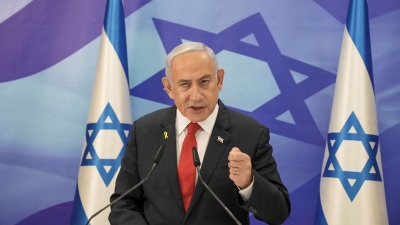
AIPAC's strategic shift comes during a period when support for Israel faces growing pressure across the entire US political spectrum. Three years after the start of the war in Gaza and amid international reactions over Israeli military operations, even segments of the American Right—which traditionally support Israel for religious and political reasons—are beginning to question the level of American financial aid to the country. Israel constitutes the largest recipient of American foreign aid, a fact intensifying the debate surrounding the cost of the Washington-Tel Aviv relationship at a time when inflation and the rising cost of living dominate domestic political debate. These developments are recorded ahead of the midterm elections on November 3, 2026. Concurrently, Prime Minister Benjamin Netanyahu's repeated pressure on the US to declare war on Iran—having now achieved this objective—has caused a rift even within the camp of President Donald Trump's supporters. Among the most vocal critics of Israel are now figures who had supported Donald Trump's political trajectory since his first election in 2016, such as host Tucker Carlson, far-right commentator Nick Fuentes, and former congresswoman Marjorie Taylor Greene.
Democratic pressure and distancing from AIPAC
Negative sentiment toward Israel is gaining ground within the Democratic Party as well, where even politicians considered potential contenders for the 2028 presidential nomination are attempting to keep their distance from AIPAC, despite continuing to support Israel. A significant role in public discourse has been played by the AIPAC Tracker, an initiative that records and publishes the sums political candidates have received to promote pro-Israel interests. However, Waleed Shahid, former spokesperson for the progressive political committee Justice Democrats, argued on Wednesday, October 21, via the X platform, that the slogan "reject AIPAC money" risks losing its political significance. As he noted, AIPAC distributed directly approximately $3 million in the current election cycle, whereas approximately $90 million originated from individual donations by its members. This distinction carries particular importance, as the organization's decision to halt direct contributions does not imply a corresponding reduction in total political funding connected to its network.
Zohran Mamdani and Abdul El-Sayed: Political influence without pro-Israel funding
The electoral success of candidates supporting Palestinian rights serves as another indication of shifting political dynamics. New York City Mayor Zohran Mamdani and Democratic candidate for the Senate in Michigan, Abdul El-Sayed, managed to strengthen their political presence without the financial backing of pro-Israel organizations. Abdul El-Sayed's candidacy holds particular significance, as the United Democracy Project is reportedly spending up to $9 million against him. Senator Bernie Sanders, among the most prominent progressive voices in the US Congress, launched a fierce attack against AIPAC via the X platform on Thursday, October 22. "AIPAC is now spending up to $9 million against Abdul El-Sayed. AIPAC is the reason we are at war with Iran. AIPAC is the reason the US has supported genocide in Gaza. We must say NO to AIPAC and YES to electing Abdul as the next US Senator from Michigan," Bernie Sanders wrote.
The battle in Michigan and implications for American politics
The November 3 midterm elections may serve as a crucial test for AIPAC's influence, as well as for the capacity of candidates with progressive positions to prevail without the support of major pro-Israel funding networks. If Abdul El-Sayed prevails, he could become the first Muslim senator in US history, according to the report. Such a development would also indicate that political proposals from the Left, which encompass isolating Israel diplomatically and politically, can secure broad electoral support in the industrial Midwest and in a state of decisive importance for the electoral balance, such as Michigan. AIPAC's retreat does not necessarily constitute a decline in its influence. On the contrary, the shift toward individual donations and independent political expenditures suggests that the organization is attempting to adapt to an environment where public alignment with Israel can entail mounting electoral costs for American politicians.
www.bankingnews.gr






Σχόλια αναγνωστών