

Athens maintains that islands generate maritime zones, including the territorial sea, continental shelf, and, where conditions are met, the exclusive economic zone
Greece arrived at the UN Security Council seeking international backing for the maritime rights of the Greek islands. Turkey responded by succeeding in shifting the debate toward the interpretation of international law, challenging Greece's diplomatic argumentation and highlighting the limits of its strategy.
What happened — The events
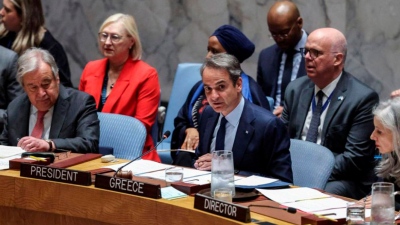
• October 29: Kyriakos Mitsotakis raised the issue of the Turkey-Libya memorandum during a UN Security Council meeting.
• Athens' argument: The 2019 agreement ignores the maritime jurisdiction of Crete, Rhodes, Karpathos, and Kasos.
• Ankara's response: Turkey questioned the degree to which Greek islands should influence the delimitation of overlapping maritime zones.
• A new development: The parliament of eastern Libya approved the 2019 agreement on October 20, 2026.
• What is at stake: Maritime jurisdiction, energy exploration, marine borders, strategic infrastructure, and power balances in the Eastern Mediterranean.
A diplomatic confrontation highlighting the weak Greek stance
Greece and Turkey clashed once again over marine borders in the Eastern Mediterranean. This time, the confrontation moved to the UN Security Council, where Prime Minister Kyriakos Mitsotakis attempted to internationalize Athens' objections to the Turkey-Libya memorandum. The agreement, signed in November 2019, establishes a claimed maritime jurisdiction between Turkey and Libya. Its geographic configuration essentially overlooks the potential maritime zones generated by several Greek islands, including Crete, Rhodes, Karpathos, and Kasos. For Athens, the problem is not merely that two countries signed a bilateral agreement.
It is that the agreement attempts to establish maritime claims in an area where Greece considers its own sovereign rights directly infringed. The situation grew further complicated on October 20, 2026, when the parliament of eastern Libya, which had previously opposed the agreement, reportedly approved it. This development handed Ankara an additional political argument and weakened expectations that Libya's internal divisions would continue hindering the memorandum's implementation. Athens expected that bringing the issue to the Security Council would reinforce its international standing. However, the confrontation with the Turkish representative demonstrated that the dispute remains far removed from a simple conflict between international law and its violation.
Mitsotakis at the UN: Geography cannot be abolished
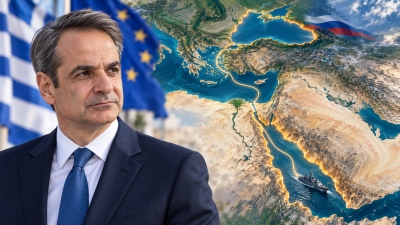
On October 29, Kyriakos Mitsotakis chaired an open UN Security Council meeting dedicated to new technologies and maritime security. Nevertheless, one of the central issues he raised in his intervention was the Turkey-Libya memorandum. The Greek Prime Minister characterized the agreement as illegal, arbitrary, and contrary to geography. His argument was clear: Turkey and Libya cannot determine marine borders as if the Greek islands situated between their coasts did not exist. Mitsotakis presented attendees with a map of the Eastern Mediterranean, drawing attention to Crete, Rhodes, Karpathos, and Kasos. These are not insignificant geographic formations. They are inhabited Greek islands with an organized economic life and their own maritime rights under international law. Athens maintains that islands generate maritime zones, including the territorial sea, continental shelf, and, where conditions are met, the exclusive economic zone. The core argument is that the geographic presence of these islands cannot simply be erased through a bilateral agreement between two other states. The real question, however, is whether the Greek presentation of geography sufficed to challenge Ankara's legal and diplomatic strategy.
What the map actually shows
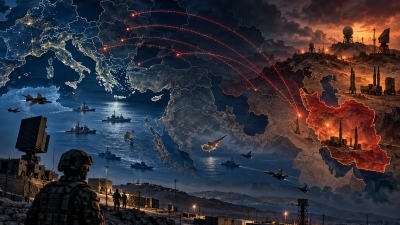
The dispute becomes clearer when examined on the map. Turkey and Libya argue that their respective maritime claims can be delimited along a line that essentially overlooks the potential maritime zones of several Greek islands. Greece rejects this approach, maintaining that islands must be taken into account in any legitimate delimitation. The central legal issue, however, proves more complex than the geographic argument alone. Under the UN Convention on the Law of the Sea, islands generally generate maritime zones just like other land territories, subject to the special exception for rocks stipulated in article 121 paragraph 3.
Simultaneously, international tribunals and arbitration bodies have occasionally adjusted the effect of islands when drawing final maritime boundaries between states. This distinction remains essential. The fact that an island generates maritime rights does not automatically mean it will receive full effect in every delimitation. Nevertheless, the existence of conflicting claims does not grant two states the right to determine, via bilateral agreement, the maritime rights of a third state without its consent. This constitutes the fundamental objection raised by Athens.
Turkey's response: The real battle concerns the interpretation of international law
Turkey's representative at the UN, Ahmet Yıldız, challenged the Greek argumentation. Ankara's stance holds that maritime zone delimitation cannot be determined simply by presenting a map or invoking the geographic existence of islands. It argues that the final delimitation line must factor in relevant geographic circumstances, conflicting maritime claims, and international legal principles. Significantly, Turkey does not dispute that Crete and Rhodes belong to Greece. The disagreement concerns the degree to which Greek islands should affect the final delimitation of maritime zones. Turkey also remains a non-party to the 1982 UN Convention on the Law of the Sea, although it maintains that maritime zone delimitation should be governed by applicable principles of customary international law.
This grants Ankara room to promote its own interpretation of international jurisprudence, particularly regarding the effect of islands in maritime delimitation disputes. Here precisely lies the significance of the diplomatic showdown: Turkey attempts to transform a dispute regarding the rights of Greek islands into a broader discussion on how international law should be interpreted. In other words, the issue is no longer simply whether the islands exist or belong to Greece. It is how much weight they should carry when conflicting maritime claims translate into a final boundary line. By shifting the debate to this question, Ankara managed to challenge the simplicity of the Greek diplomatic narrative. This represents a significant diplomatic development, which, nonetheless, does not establish the legal validity of the Turkey-Libya memorandum.
Why eastern Libya changed stance
Until recently, the political leadership of eastern Libya opposed the maritime memorandum signed in 2019 by the Tripoli government. However, on October 20, 2026, the Libyan House of Representatives reportedly approved the agreement with Turkey. For Ankara, this constitutes a major political development. Over recent years, Turkey has strengthened contacts not only with western Libyan authorities but also with eastern political and military structures.
The commander of the Libyan National Army, Khalifa Haftar, continues playing a central role in the political and military balance of power in eastern Libya. For Greece, this development causes particular concern. Until recently, Libya's internal divisions offered Athens an extra political argument against the memorandum. The prospect of broader understanding among political actors in eastern and western Libya alters the data. Nevertheless, political approval from the eastern Libyan parliament does not automatically resolve issues of constitutional competence, international recognition, or third-state rights. Nor does it transform the memorandum into a legally secured marine border binding Greece. Nonetheless, Ankara has gained political ground.
Athens takes the dispute to the UN and strengthens ties with Egypt
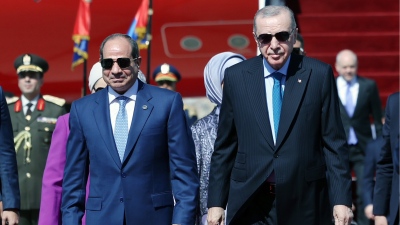
Greece's diplomatic counter-offensive began long before the Security Council meeting. Greece referred the dispute over the Turkey-Libya memorandum to the UN and the European Union. Athens insists that the agreement between Turkey and Libya cannot produce legal effects to Greece's detriment without its consent. Egypt and Cyprus also constitute vital partners in the region's diplomatic equation. Relations with Cairo hold particular significance. In 2020, Greece and Egypt signed a partial delimitation agreement regarding their exclusive economic zones. The agreement established a framework of cooperation without settling every potential maritime boundary between the two countries. Burdened by recent developments, Athens possesses an additional reason to reinforce coordination with Cairo. The relationship with Egypt offers Greece something more substantive than diplomatic statements: an existing bilateral agreement founded on principles of maritime delimitation. The broader challenge, however, persists. Greece must translate its diplomatic positions into a coordinated regional strategy involving Egypt, Cyprus, and its European partners.
Natural gas, oil, and strategic infrastructure: The economic stake
The maritime border dispute is not merely a legal or diplomatic disagreement. It exerts direct impacts on hydrocarbon exploration, infrastructure investments, and the future of economic development in the Eastern Mediterranean. Greece holds an interest in offshore hydrocarbon research south and southwest of Crete. International energy companies, including Chevron, have participated or examined projects in the region. Turkey has repeatedly challenged Greek maritime claims and opposed certain energy initiatives that Ankara deems incompatible with its own interpretation of maritime boundaries. The impacts extend beyond oil and gas.
The Eastern Mediterranean is also acquiring rising importance for electrical interconnections, transport corridors, and strategic infrastructure. The Greece–Cyprus electrical interconnection serves as a characteristic example of a project whose implementation has become entangled in broader geopolitical disputes. For Greece, protecting maritime rights connects directly to investment security, energy planning, and the capacity to develop infrastructure without external pressure.
What follows: Negotiations or a new diplomatic crisis?
Mitsotakis's presence at the UN aimed to reinforce Greece's international standing. Yet the confrontation with the Turkish representative demonstrated that Ankara remains unwilling to accept the Greek interpretation of maritime delimitation. Instead, Turkey continues promoting its own reading of international law, emphasizing the role of geographic circumstances and the effect of islands during the final delimitation of marine borders. The approval of the memorandum by the eastern Libyan parliament, provided it is confirmed through relevant legal processes, adds another layer to the dispute. For Greece, the challenge is now twofold. First, it must continue defending its islands' maritime rights through international law and diplomatic mobilization. Second, it must prevent the entrenchment of the Turkey-Libya arrangement as a political reality via expanded bilateral cooperation and practical activities in contested areas. Available options include diplomatic negotiations, bilateral agreements, regional coordination, and international legal proceedings, provided necessary jurisdiction and consent criteria of involved parties are met. A speech at the UN cannot single-handedly resolve a maritime dispute. Nor can the Security Council automatically annul a bilateral agreement through a political debate. The real test will be whether Greece can convert its international objections into continuous diplomatic and legal action.
A diplomatic defeat for Mitsotakis
Turkey did not need to erase Crete from the map. It sufficed to make the international community debate how much Crete's maritime rights should count. This constitutes the core political and diplomatic problem highlighted by the UN confrontation. Mitsotakis arrived at the Security Council with a powerful geographic argument: Crete, Rhodes, Karpathos, and Kasos exist, belong to Greece, and generate maritime rights under international law. Yet Ankara responded by shifting the debate to a more complex legal terrain: the distinction between the maritime rights of islands and their effect on the final delimitation of borders. Precisely here does Turkish strategy attempt to carve out maneuvering room. The danger for Greece is that a dispute concerning the application of international law gradually transforms into a gray zone of conflicting interpretations, political agreements, and accomplished facts. The shift in stance by the eastern Libyan parliament renders the challenge even more severe. A document facing domestic resistance within Libya until recently now appears to have acquired a broader political base. Greece needs more than maps, speeches, and declarations. It requires continuous legal preparation, tighter coordination with Egypt and Cyprus, stronger European engagement, and a clear strategy for protecting its maritime interests. Ultimately, the real danger is not that international law has vanished. It is that Turkey is attempting to turn its own interpretation of this law into an alternative political reality in the Eastern Mediterranean. And if Athens cannot respond with a coherent diplomatic and legal strategy, the UN intervention risks going down in history less as a turning point for Greek diplomacy and more as a warning regarding its limits.
www.bankingnews.gr


Σχόλια αναγνωστών